Weimaraners and Coat Care: What Nobody Tells You
And honestly, the first time I brought my Weim home, I thought I’d lucked out. Short coat, sleek fur, no tangles to deal with. This was going to be the easiest grooming experience of my life, right?
Wrong. So wrong. Here’s what nobody tells you about that gorgeous silver-gray coat: it shows everything.
Every speck of dust, every water spot, every bit of dry skin flaking off because you didn’t realize these dogs have surprisingly sensitive skin. I spent the first six months wondering why my dog looked perpetually dusty when I’d literally just bathed him. That silver sheen isn’t automatic—you have to work for it, but not in the ways you’d expect.
The Over-Bathing Mistake
The biggest mistake I made early on was over-bathing. I thought more baths meant shinier coat. Makes sense, right?
Except Weimaraners have this thin, fine coat that sits close to their skin, and all that bathing was stripping away the natural oils that actually create that metallic gleam everyone loves. I was literally washing away the shine I was trying to achieve. My vet finally set me straight after I complained about dry, flaky skin for the third visit in a row.
Now I bathe my Weim maybe once every 6-8 weeks unless he’s rolled in something genuinely disgusting. Which, let’s be honest, happens more than I’d like to admit because these dogs have zero sense of self-preservation when it comes to mud puddles and dead things. Brushing is where the real magic happens, and I’m going to die on this hill.
The Power of Brushing
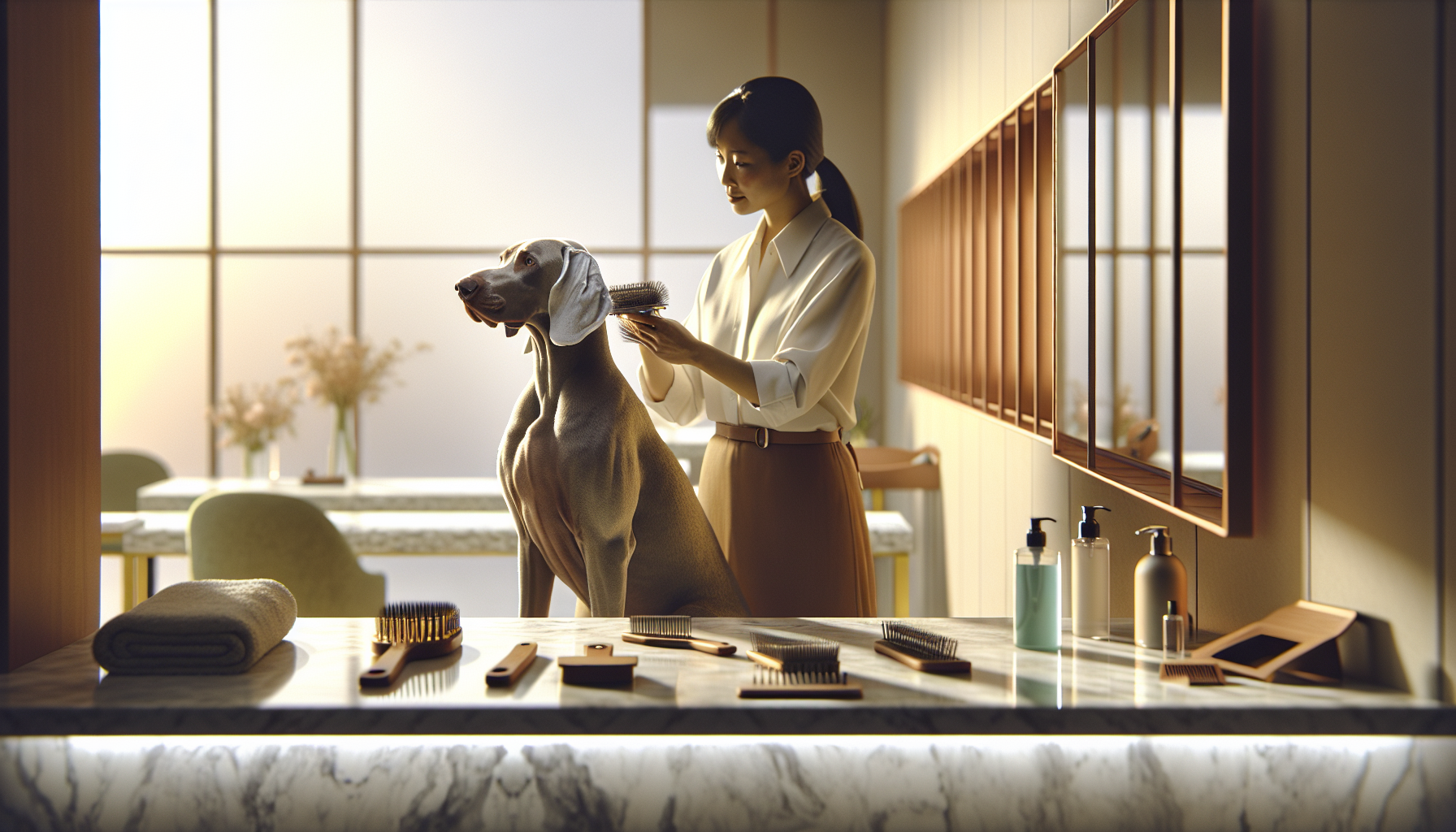
People skip brushing because the coat is short and there’s nothing to detangle. But brushing isn’t just about tangles—it’s about distributing those natural oils across the entire coat, stimulating the skin, and removing loose fur and debris before it dulls everything down. I use a rubber curry brush (the kind that looks like it has little nubs all over it) about three times a week, and the difference is night and day.
The rubber curry does something a regular bristle brush can’t: it actually grabs the loose undercoat. Yes, Weimaraners have an undercoat. It’s minimal compared to a husky or something, but it’s there, and during seasonal changes, it sheds like crazy.
The first spring I had my dog, I thought he was sick because so much fur was coming off. Nope, just normal shedding that I wasn’t managing properly. After the curry brush, I’ll sometimes follow up with a chamois cloth or even just a slightly damp microfiber towel.
Sounds fancy but it takes about 30 seconds and buffs everything to a shine. This is the step that makes people ask what special products I’m using. Speaking of products—less is genuinely more with this breed.
Keep Product Use Minimal
I’ve tried the expensive coat sprays, the shine serums, the conditioning treatments. Most of them just made my dog’s coat feel greasy or left a weird residue. The only product I consistently use now is a gentle oatmeal-based shampoo when bath time does roll around, and occasionally a light leave-in conditioner if his skin is looking dry in the winter months.
I’m honestly not 100% sure if the conditioner makes a huge difference or if it’s just become part of my routine because it feels like I should be doing something. But his skin doesn’t flake in February anymore, so I’m sticking with it. Diet affects coat quality more than any product you’ll ever buy.
Diet and Nutrition Matter
This one surprised me because it seems so disconnected. But about a year in, I switched from a budget kibble to a higher-quality food with better fat content, and within maybe six weeks, his coat changed. More lustrous, softer, that silver color seemed deeper somehow.
I asked my vet about it and she said the fatty acids in quality food basically feed the skin from the inside out. Now, I’m not saying you need to spend a fortune on dog food. But if your Weim’s coat looks dull no matter what you do externally, it might be time to look at what’s going into them rather than what you’re putting on them.
Some people swear by adding fish oil supplements. I’ve done it on and off, and I think it helps, but I haven’t been scientific about it. Just my anecdotal experience from a decade of living with these gray ghosts.
Protect the Thin Coat from Elements
Protect that thin coat from the elements—these dogs aren’t as tough as they look. Weimaraners are athletic, muscular, built like little gray tanks. But that single-layer coat offers basically zero insulation and minimal sun protection.
In winter, my dog shivers if we’re outside for more than 15 minutes, and in summer, I’ve seen him get sunburned on his belly and the tops of his ears. I keep a light jacket on him for cold-weather walks, and I’m not embarrassed about it anymore. The first time I put a coat on him, my buddy laughed and called him a pampered house pet.
That same buddy watched his own Weim develop a skin infection from cold-weather exposure that winter, so. Sun protection is trickier. I try to limit midday sun exposure in summer and stick to shaded trails.
Some people use pet-safe sunscreen on the ears and nose, which isn’t a bad idea, though I always forget to apply it until we’re already at the trailhead. Check the skin regularly because problems hide under that pretty coat. This breed is prone to skin allergies, lumps, bumps, and various irritations that you won’t notice unless you’re actually looking.
Regular Skin Checks
During brushing sessions, I make it a habit to run my hands over every part of my dog’s body. Partly because he loves it, but mostly because I’ve caught things early that could have become bigger problems—a small hot spot developing, a tick I’d missed, a weird lump that turned out to be nothing but still needed checking. The thin coat means you can actually see and feel the skin pretty easily once you know what you’re looking for.
Consider it a perk of the breed.